
For a long time, longer than I can exactly remember, I had wanted to visit Norway. The rugged natural beauty of the country has been a beacon, mesmerizing, calling out to me to come and explore. When the time came for us to think about vacation options for our 15th wedding anniversary, Norway made the initial cut. Then steadily made its way up to the top. Booking the flights was the easy, although expensive, part. Working on the itinerary of where we will go in Norway and what we will do, took a long time. I had about 4 working iterations of the route before I finalized on the one that we ultimately took.
Here is the photo album of the trip.
There are a lot of details below. This serves two purposes:
1. Helps us recap the entire experience from the planning stage to the post-trip accounting balancing process, with everything in between; and
2. Serve as a guideline for someone planning a similar trip
Let’s dive right in …
I wanted Oslo to essentially to be the point of entry and exit. A little bit of walking around the city, taking in the sights and sounds of the area we were in – and that’s it. Not that I have anything against Oslo – it’s a great city, though with horrible rush hour traffic! Just that it was a medium sized city, even though it’s the biggest city in Norway by a LOT. In fact, Oslo is a city, a municipality, and a county, all at once; the only one in Norway. I wanted to utilize as much time outside big cities as we could.
This was our planned route around Norway.
Oslo-Valdres-Åndalsnes-Trollstigen-Geiranger-Florø-Flåm-Oslo
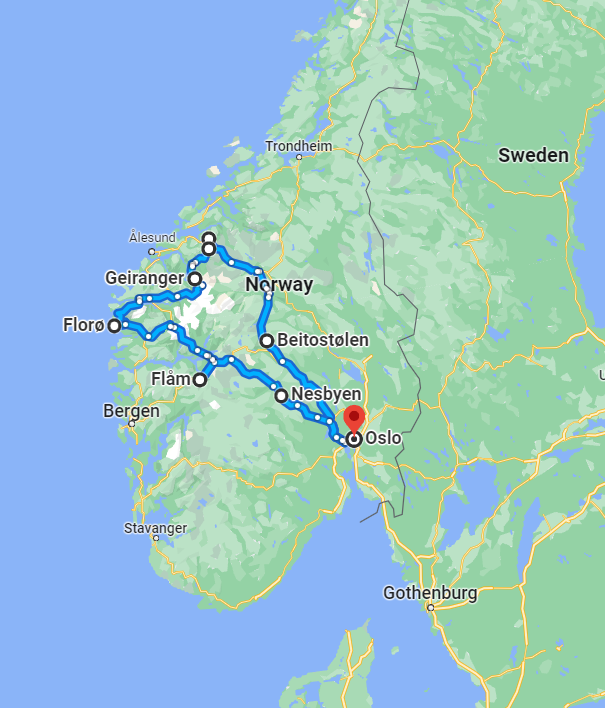
Initial plans included visits to Bergen (2nd biggest city), Trondheim (3rd), Ålesund (biggest fishing town), Lillehammer (host of ’94 Winter Olympics).
I had never heard of Åndalsnes (pronounced as “un-dolls-ness”), Flåm (“flom”), or Florø (“flur-yo”) before I went down the rabbit hole of finding places that were slightly off the touristy path. Smaller, beautiful parts of the country connected by picturesque roadways, some of them the stunning Norwegian Scenic Routes. There are 18 such routes. We went through 2 full routes and parts of 2 more. Valdresflye, Geiranger-Trollstigen; and small sections of Aurlandsfjellet and Gualarfjellet.
Here is our daily schedule in tabular form.
| Sun | Aug 13 | Day 0 | Fly out of MSP |
| Mon | Aug 14 | Day 1 | Fly in to OSL. Get rental car from airport. Spend night in Oslo |
| Tue | Aug 15 | Day 2 | Start for Valdres-Beitostølen. Drive all the way to Isfjorden, spend night. |
| Wed | Aug 16 | Day 3 | Explore around Åndalsnes; spend night at Isfjorden |
| Thu | Aug 17 | Day 4 | Explore around Åndalsnes; spend night at Isfjorden |
| Fri | Aug 18 | Day 5 | Start for Geiranger, through Trollstigen. Spend night at Florø |
| Sat | Aug 19 | Day 6 | Spend night at Florø |
| Sun | Aug 20 | Day 7 | Start for Flåm, spend night at Aurland |
| Mon | Aug 21 | Day 8 | Start for Nesbyen; spend night at Oslo |
| Tue | Aug 22 | Day 9 | Fly out of OSL |
I had reserved an economy car from Hertz at Oslo Gardermoen airport. We got “upgraded” to a Tesla Model Y. Upgraded by paying *only* $20 a day extra. The rental guy convinced us that we’d save much more than that by not having to pay for gas and discounts on tolls for EVs. Tesla superchargers are free for Tesla rentals from Hertz. I had looked at book an EV but then gave up on the idea as I did not want to deal with range anxiety, even though I know that Norway has one of the most extensive EV adoption rate and charging stations built around the country. Anyway, I got swayed by this sweet deal and we drove around a Model Y for 9 days! There were only 2 instances where we had to charge in non-supercharger place and it cost $18 for that. [For context, a gallon of gas in Norway cost about $9 and here it is about $3.50/gallon. We drove for 1,076 miles. Assuming a small ICE car would have given us 30 mpg, @ $9/gallon it would have cost us $325] See footnote for end of trip surprise1.
We spent the first night in Norway at the Radisson Blu Plaza Hotel in Oslo. Pretty neat place. Right in the middle of the city with everything within a quick walk. We visited the Oslo Central train station, the Oslo Opera House, and some local restaurants and bakery.
After our first night in Oslo, we had the longest drive scheduled in a day for the whole trip. It was supposed to be 450 km (280 miles) in about 7 hours. Not too much for someone from the US where driving 500 miles in a day on a road trip is not very unusual, right? Wrong.
You see, central and southern Norway had been having record rainfall in the couple of weeks prior to us getting there. The rains had slowed down when we arrived there but was still causing quite a few road closures and diversions. Add to the mix where we made a couple of wrong turns, one misguided (pun intended) navigational error, driving over 10 km of muddy, mountainous roads following local residents (many thanks to the mother and son duo, whose names we forgot to ask!) we met in a store who were kind enough to lead the way around a road closure, it took us 560 km (350 miles) and a little over 12 hours. We did not see the sun at all the whole day and we had rain for about 90% of the time. The drive though was still very good. The Valdresflye was on this stretch.
This ended up as the route from Oslo to Isfjorden.

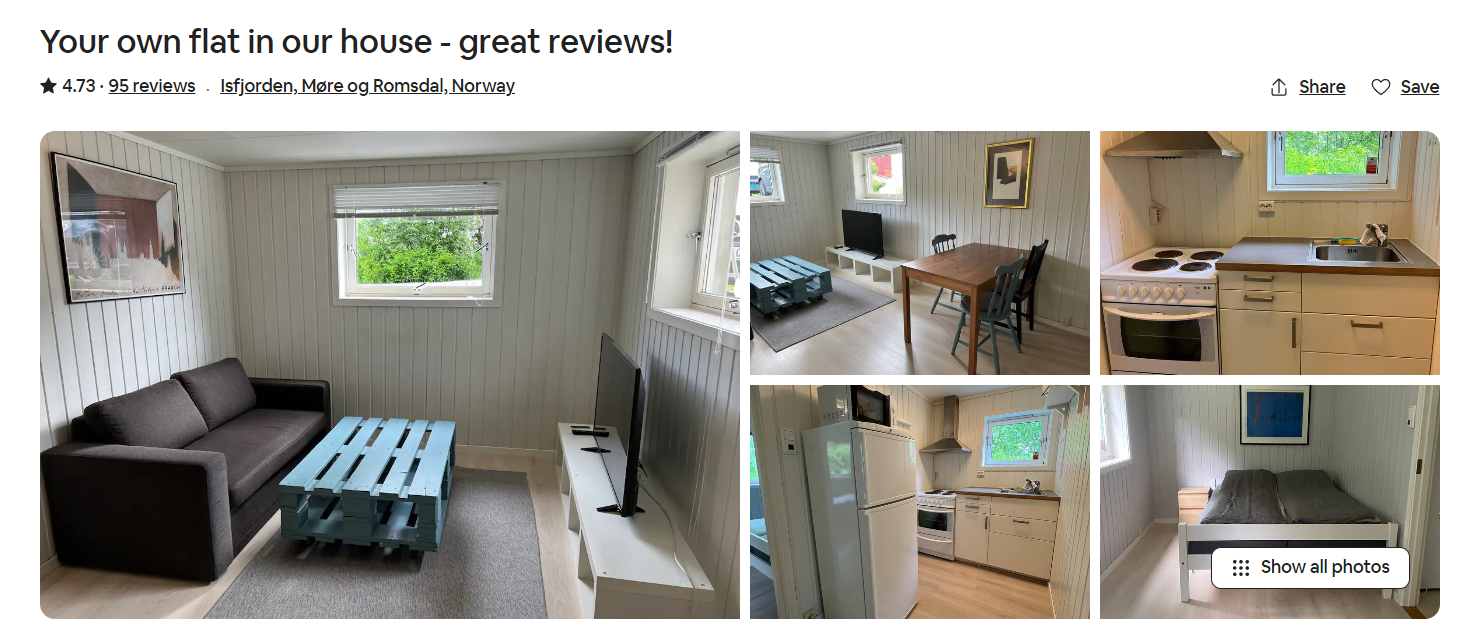
We stayed at this AirBnb for three nights in Isfjorden (“iss-fior-den”), a small town right next to Åndalsnes. Great location, nice and spacious place, great hosts.
The next day we took it slow and easy. Went to the local grocery store in the morning and got bread, eggs, fruits, veggies, and deli meat for breakfast and lunch for the next couple of days. Visited the Norsk Tindesenter (Norwegian Mountain Center) where we watched a short film on the majestic mountains in the region, history of mountain climbing, and then got to use their indoor climbing center. In the evening we took the gondola had our anniversary dinner at the Eggen restaurant.
Experience of a lifetime.
Our hike up Litlefjellet was planned for the next day. Litlefjellet means “Little Mountain”. It’s an ascent of 140 m (460 ft) which take you up to 790 m (2,600 ft) above sea level. It took us about an hour to get to the top. Glorious views from the top. The town of Åndalsnes spread out down below, with the Rauma river flowing languidly into the fjord. The opening shot of the Netflix movie Troll is filmed around the mountains (Trolltinden, Trollveggen) surrounding Litlefjellet. We spent an hour and half atop and then went down.

Experience of a lifetime.
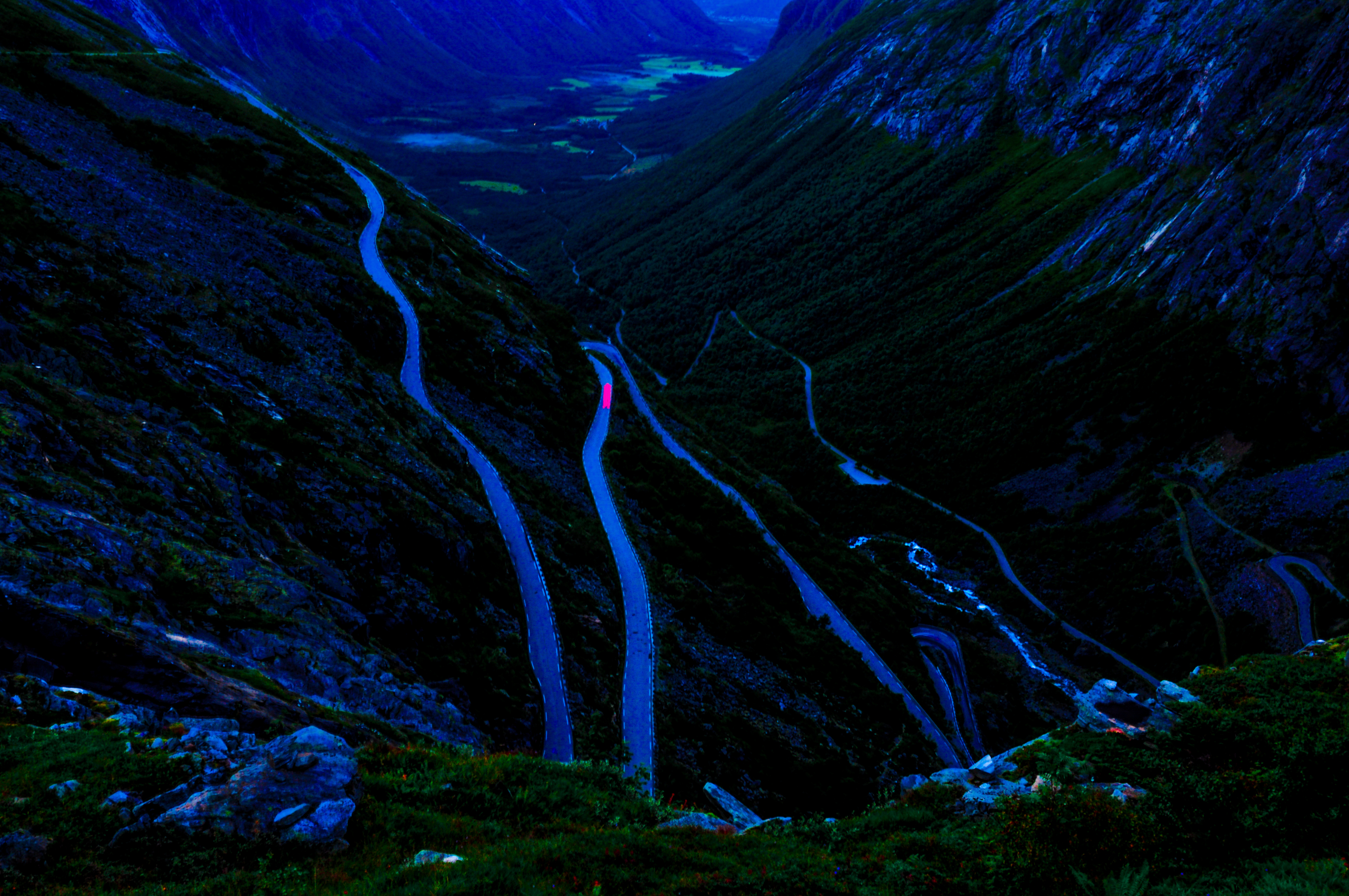
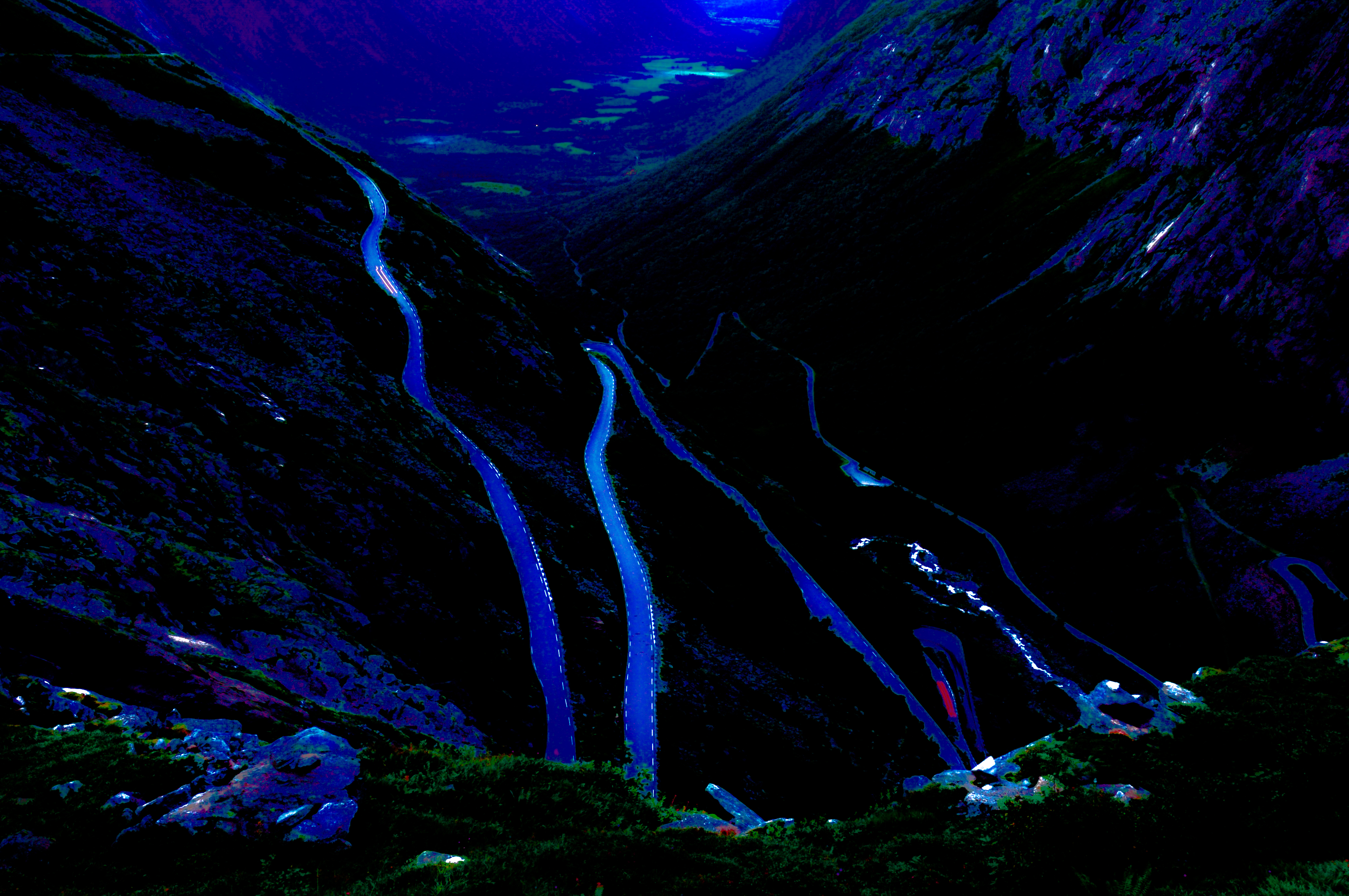
That evening, I went up the Trollstigen to take some shots of the winding mountain pass, with 11 switchbacks, in twilight. The next morning we were scheduled to take the same route and go to Geiranger but I wanted the setting sun and the impending darkness to give me a setting to capture something unique. I think I did.
Experience of a lifetime.
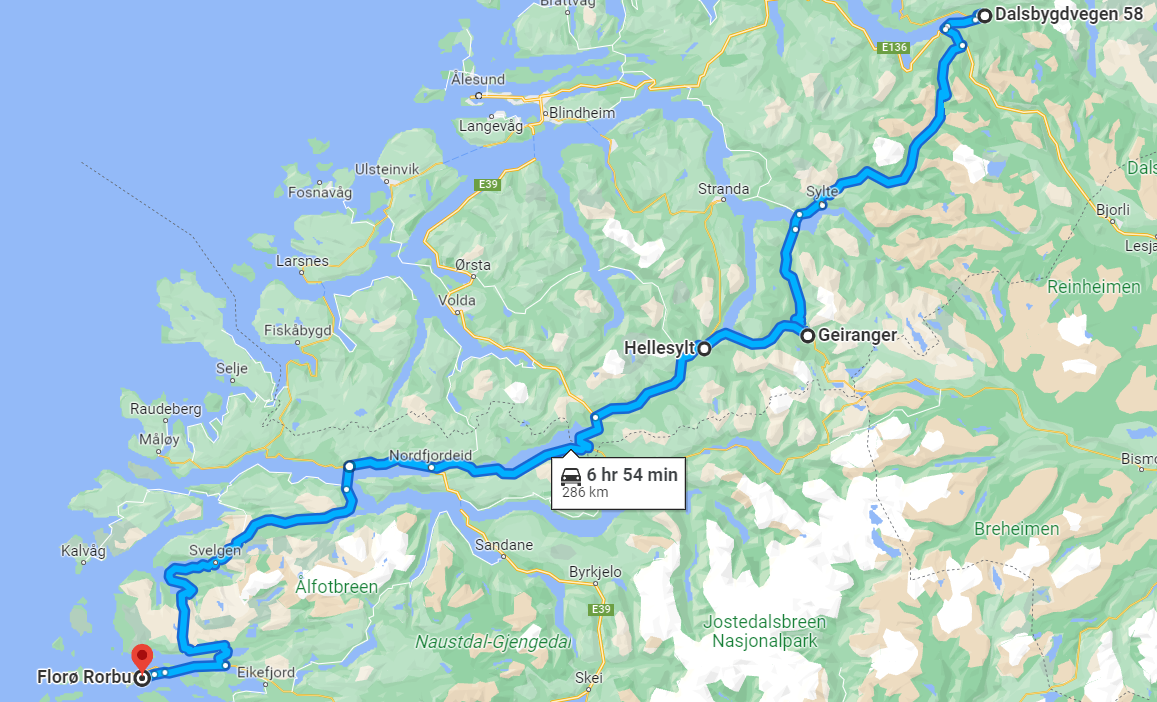
We started off towards Geiranger on the Geiranger-Trollstigen scenic route the next morning, with the final destination for that day being Florø. This was our route from Isfjorden to Florø – our third longest drive of the trip at 286 km (178 miles). The are three ferry rides en route: Linge to Eidsdal (2.7 km), Geiranger to Helleslyt (20 km), and Stårheim to Isane (3.7 km).
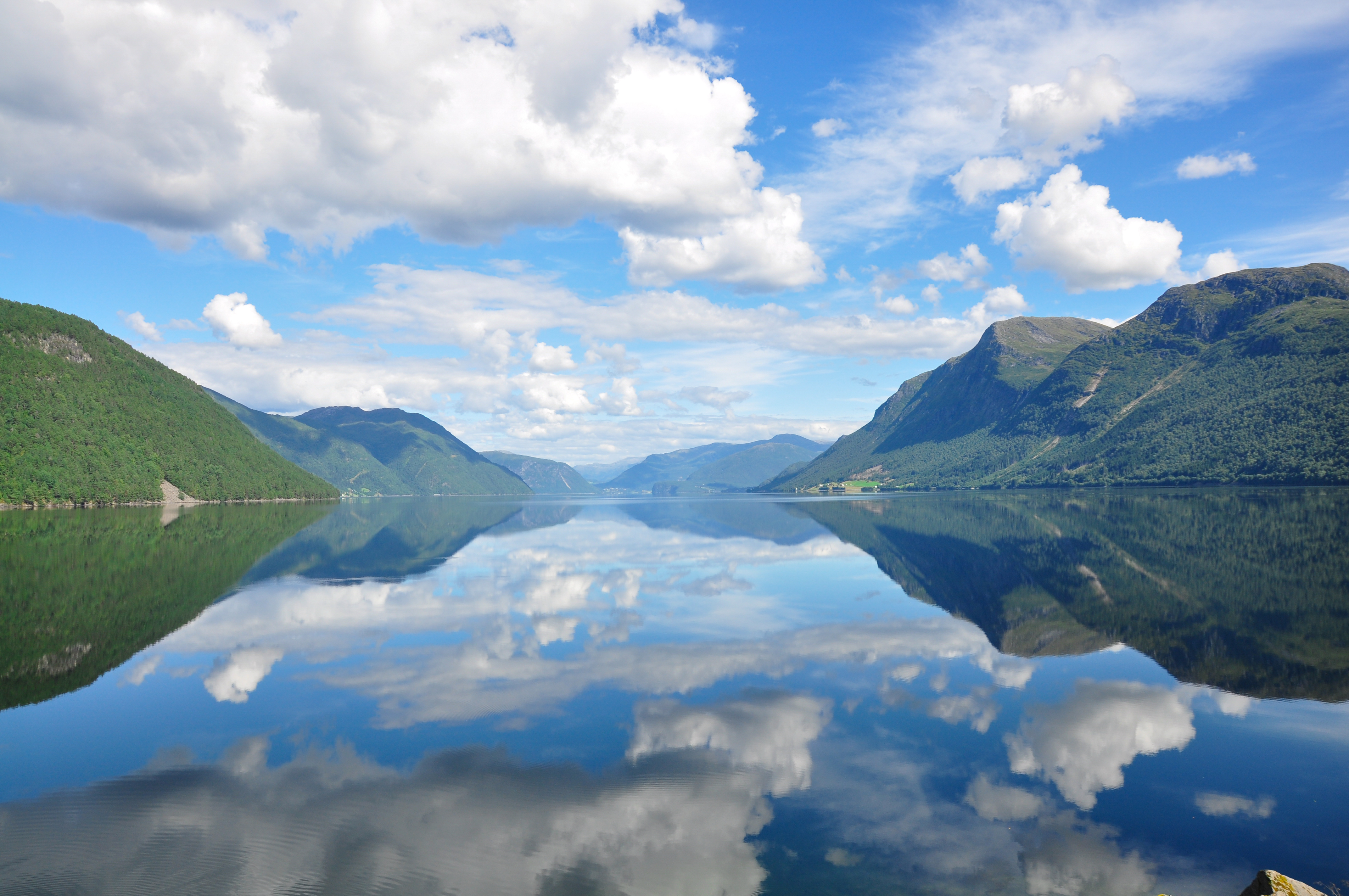
We drove past Eidsvatnet Lake, one of the clearest and calmest waters you’d ever see. The reflection was unbelievable.

The second of the three ferries was probably one of the most touristy things to do in Norway – ferrying across the (UNESCO World Heritage listed and one of the most famous of all fjords) Geirangerfjord from Geiranger to Hellesyt. Here is the Seven Sisters waterfall, one of the most photographed falls in the Geirangerfjord.

When we reached Geiranger, we were told that the next two ferries were sold out and we’d have to wait for at least 3 hours before we could get on one. But we could wait and see if the the very next one had space after all existing ticket holders had boarded. We waited and …we got in!
We then went by Hornindalsvatnet, the deepest lake not just in Norway but all of Europe, with max depth reaching 514 m (1,686 ft). Stupidly beautiful.
We stopped in the town of Nordfjordeid to have lunch from a Mediterranean café.
Finally we reached our lodging for the next couple of nights at Florø Rorbu, which is literally by the ocean. You open the patio door, walk for 10 ft on the deck, and boom, you can dip your foot in the ocean water. The small and idyllic fishing town of Florø is Norway’s westernmost town. We took the rest of the evening to walk around a bit and then just sat and enjoyed the view from the patio.
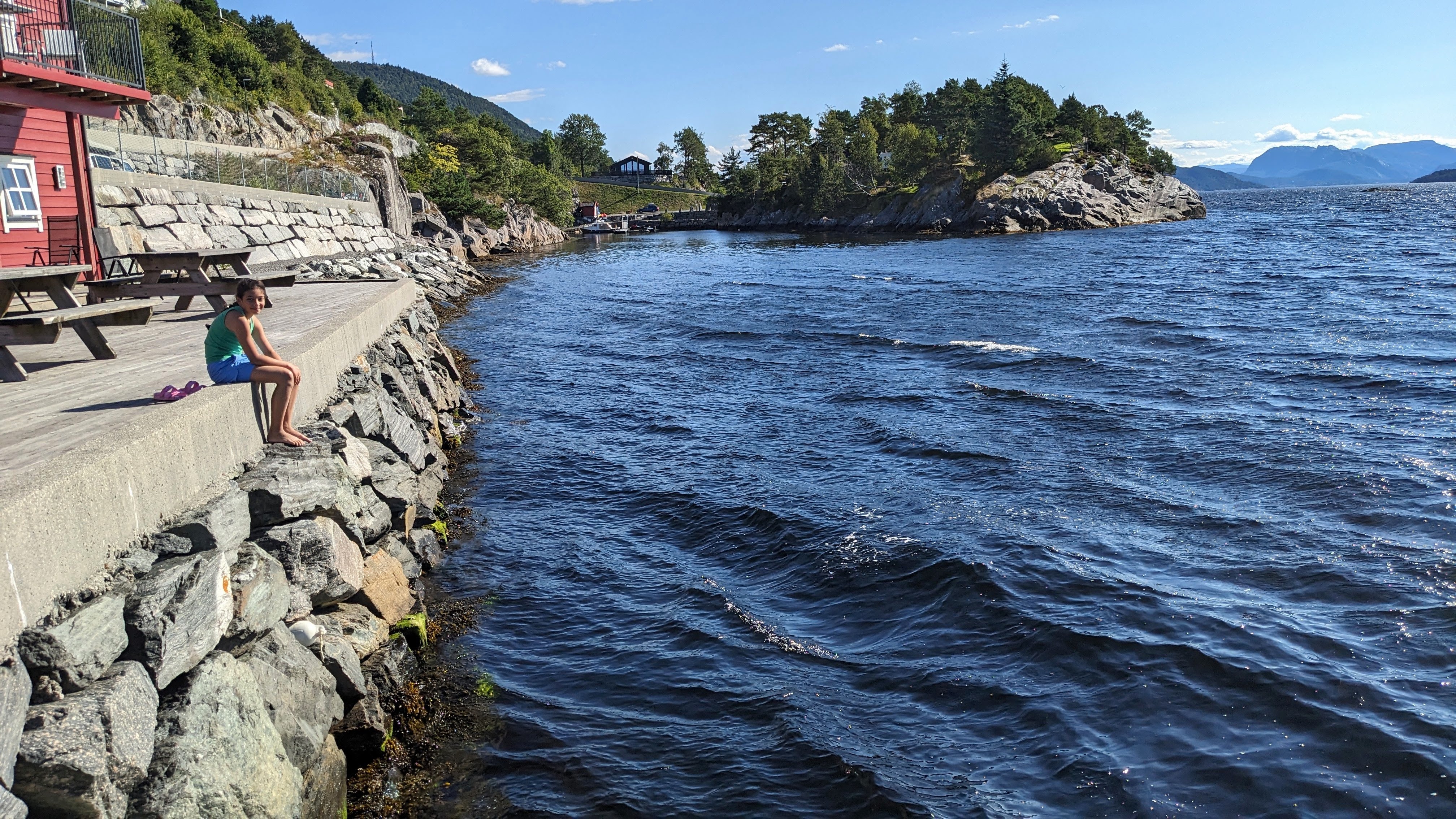
The next morning Vivian and Brinda drove into town to get breakfast, a.k.a, donuts. I had thought about going on to the island of Kinn but we decided to take it easy. We went for a walk on the marina and spotted an indoor swimming pool. We decided to check it out. The pool is by the ocean as well and has a nice concrete area where some people were jumping off into the water. Brinda and I did that as well. We then spent a couple of hours in the pool, which had lanes, a diving pool, a water slide and a kids area. For lunch we went into town. Came back to rent a small motorboat to take out into the open waters. High winds and clouds were rolling in at this point so we didn’t go too far. By the time we came back and docked the boat, it had started to sprinkle. The drizzle didn’t let up till the next day when we left Florø. Though, later in the evening, I went out to get pizza from the Hjørnevikbua pub and to catch an English Premier League game.
We started for Flåm the next morning. The plan was to drive directly to the station, take the roundtrip train to Myrdal, and then go to our lodging for the night at Bjørgo Gard – Stegastein. At 248 km (154 miles) this was the shortest driving-day of our trip.

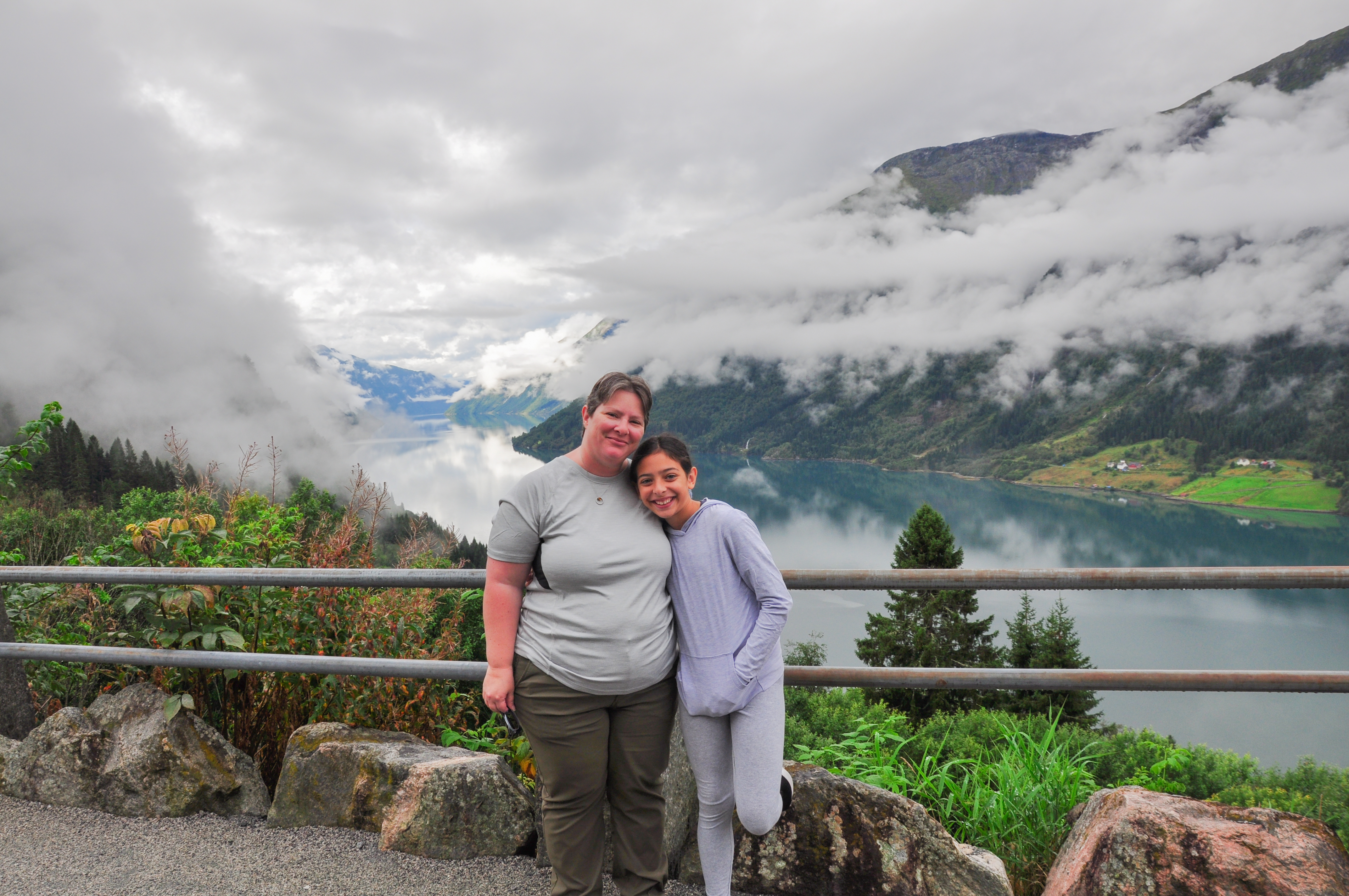
On this route, take in the scenery from the viewpoint of the Fjærlands fjord, which is right after the tunnel in Fjærland going south on Rv5.
You also get to ride another ferry, Mannheller to Fodnes (3 km). And you get to drive 24.5 km (15.2 miles) through the longest road tunnel in the the world, the Lærdalstunnelen.
The Flåm-Myrdal train ride was probably the second most touristy thing we did whole trip. It’s ok. Actually … it’s better than ok but since we’ve been traveling around so much at this point and seen so many incredible views and vistas our bar was a bit high. The train takes about 1 hour to go each way and you can stay around Myrdal as long as you want to. We were up in Myrdal for an hour and half walking around and taking pictures. This is also where we met this older couple from Minnesota who came and talked to us as we were wearing Gophers and Twins shirts. Enjoy the Huldra song and dance show, performed by dancers from the Norwegian Ballet School, at Kjosfossen (the Kjos falls) along the way!

After our Flåmsbana excursion, we headed up to our lodging for the night, nestled in the mountains, up on the Aurlandsfjellet National Scenic Routes. We did not travel the entire 48 km as our place was about 10 km in, right after the 7.5 km mark of the famous Stegastein viewpoint. From Stegastein you have a look at the regal Aurlandsfjord, a part of the Sognefjord, which is the largest and deepest fjord in Norway (and the second largest fjord in the world, behind Scoresby Sund in Greenland).
We stayed at Bjørgo Gard – Stegastein. A quaint and cozy place in a very picturesque setting. The only downside was we had to park our car and hike up an unpaved, incline path for about 50 yards to enter the place, while hauling suitcases. And the next morning it was drizzling!
The drive up to Stegastein features 7 switchbacks. It is a narrow road to begin with. At many points along the way the roads narrows down even further so that only one car can go through. There are outcrops at intervals and you have to be very aware and careful that you and another car from the opposite direction do not end up in a bottle neck. The 7.5 km drive (4.6 miles) took us about 20 mins. At certain stretches I was a white-knuckled driver murmuring under my breath, “oh please don’t let a car come!”
While driving up in late afternoon, Stegastein was packed with tourists. We managed to get in front after a bit of a wait but there was no way I was going to get enough time with the camera. But we figured out that on our way down the next morning we might have better conditions. We left Bjørgo Gard at 7 in the morning and we lucked out! Stegastien was bereft of any other humans.
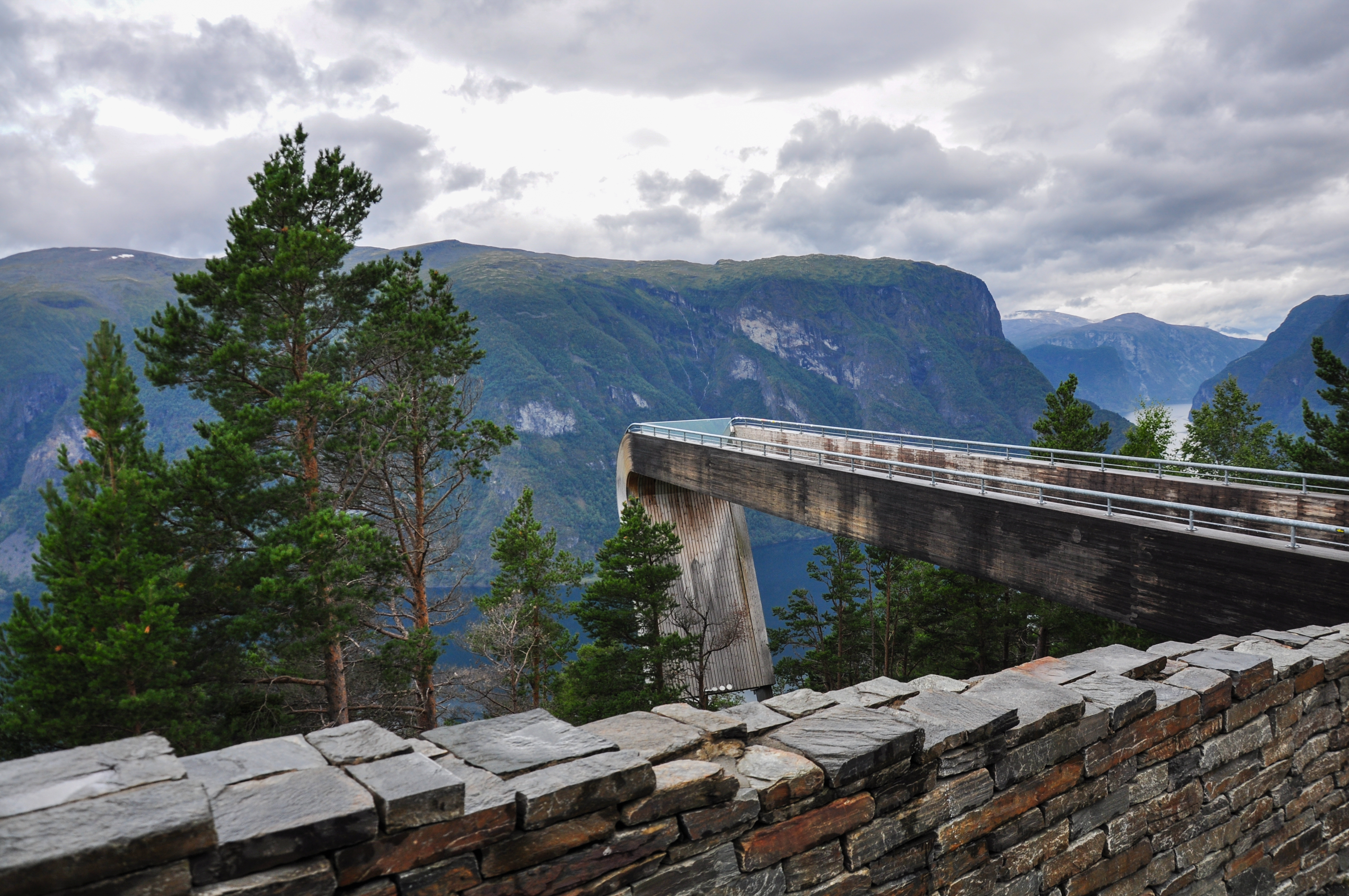
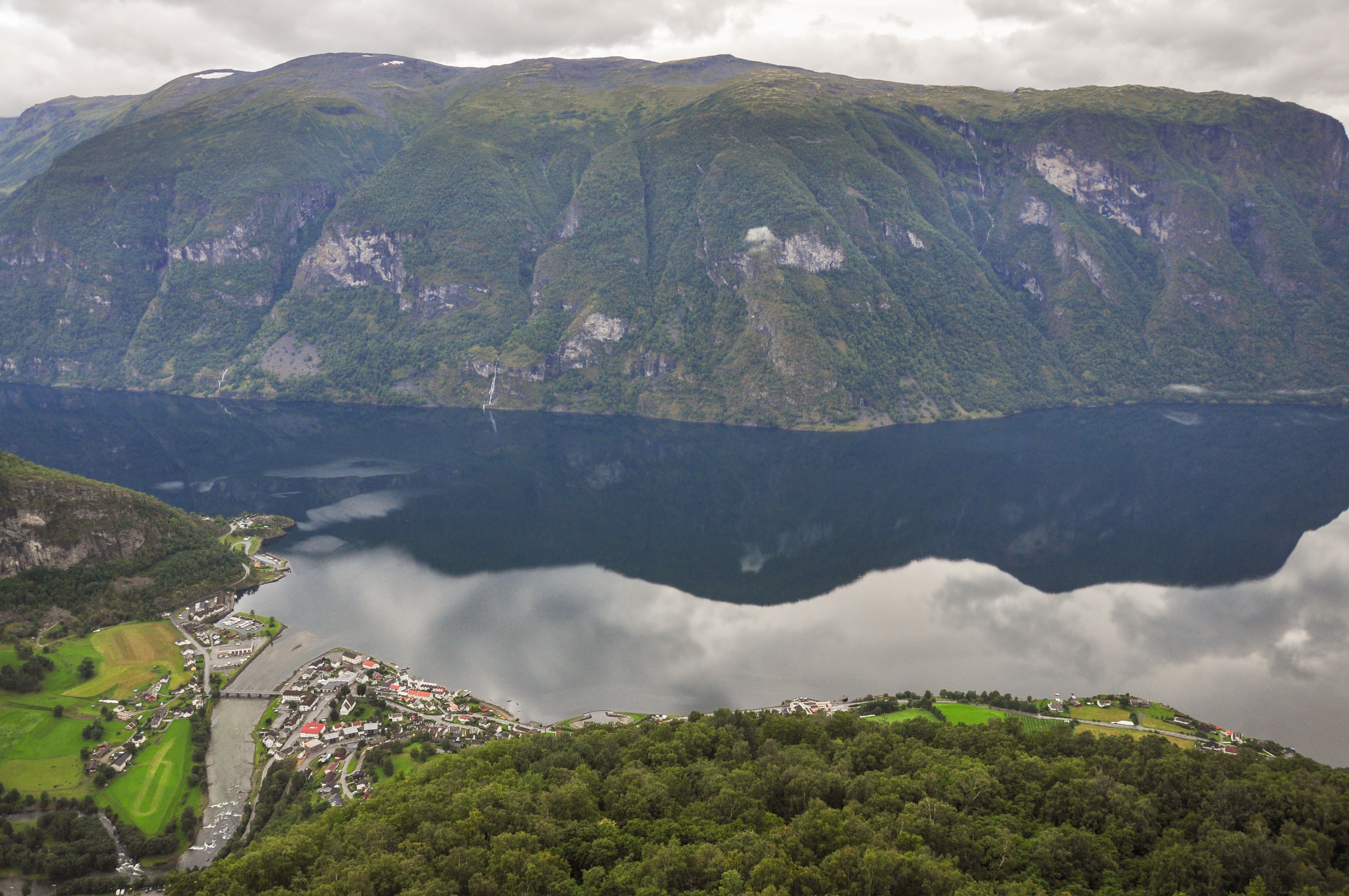
Experience of a lifetime.
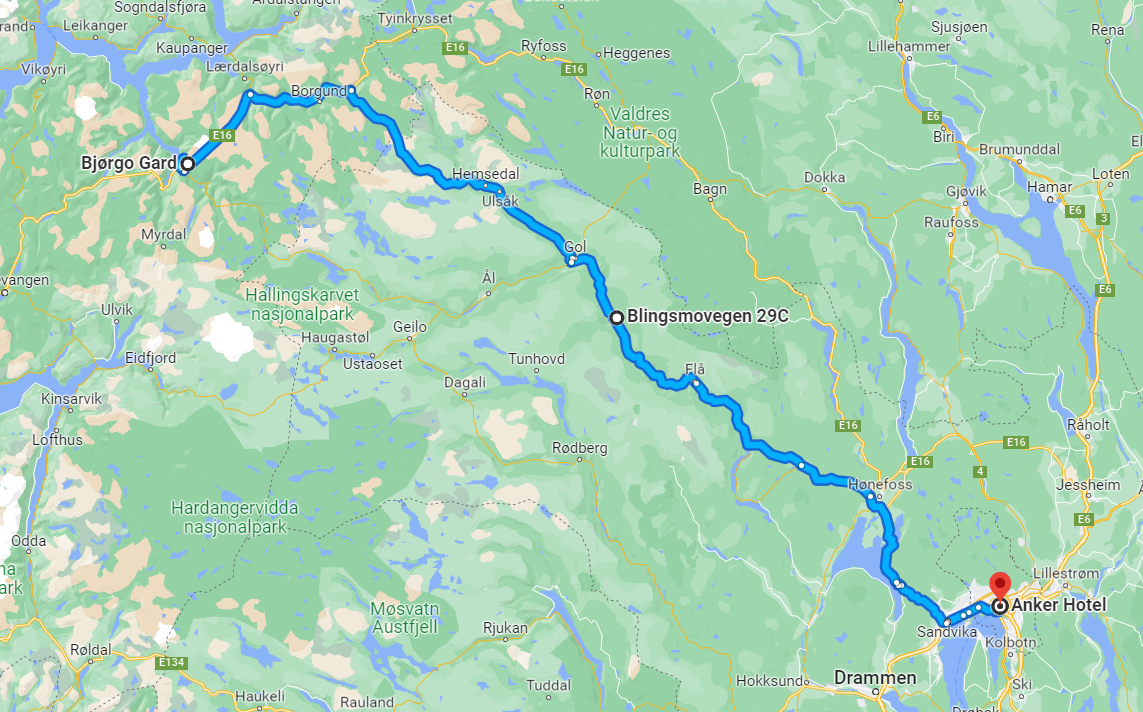
Our last full day in Norway had us going from Aurland back to Oslo, with a stopover in Nesbyen to visit a relative. This was our route. At 319 km (198 miles) this was our second longest driving-day.
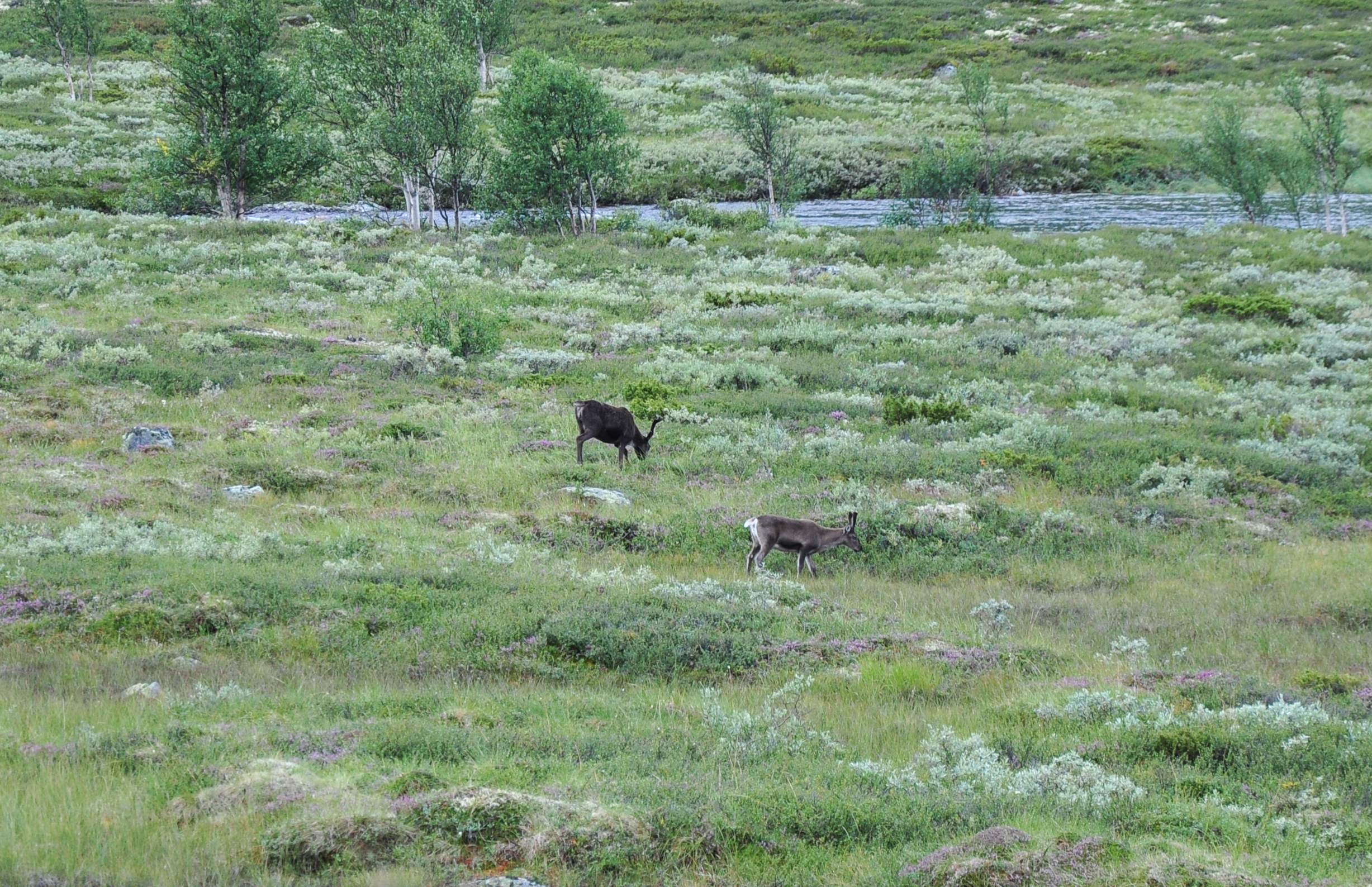
We spotted these pair of elks on Hemsedalsvegen Rv5, about a third of the way from Borlaug to Hemsedal.
Getting into Oslo was a nightmare as rush hour traffic is possibly worse than New York! Traffic added an extra 1.5 hours to our travel time 😤
We spent our last night in Norway at the Anker Hotel in Oslo. The “family” room was small – they had put in an extra bed in a 2-twin bed room. The breakfast, though, was epic with a bevy of tasty options. I charged the car in an underground Tesla supercharger, down in the belly of downtown Oslo. We had a pretty good dinner at Südøst restaurant close to the hotel.
Next morning, we went went to OSL Gardermoen to catch the return flight back. Though, what would an out of country trip be without some immigration drama, this time2 while connecting through Reykjavik!
Observations, things to do/not to do, and such
- Make sure you have at least one Visa or Mastercard credit card that does not charge foreign transaction fees. We had a Visa and a Discover card; Visa is accepted everywhere where there is an electronic POS (point of sale), which is pretty much everywhere, while Discover had probably about a third succes rate
- We did not have any Norwegian krone (NOK) with us. Did not need it. Had a couple of hundred USD in hard bills, which we did not use.
- Norway is one of the most expensive countries in the world
- Parking in Oslo is not cheap. For the first night at the Radisson Blu Plaza we got charged $40. Anker Hotel had only street parking. Cost us about $60 for the evening/night.
- Food, especially fast food, is strangely expensive. For example, a gyro and fish ‘n chips combo cost us $40 from a local fast food chain! A foot long hotdog from convenience stores is a pretty decent option at $5. Gourmet food from nice restaurants, on the other hand, is quite affordable. Draft beer was about $9 a glass, in a couple of different places in the country. Buying from grocery stores and planning meals ahead will save you a bunch.
- As mentioned earlier, gas cost over 2x than you’d see in the US
- Tipping in restaurants is not expected. 10% is on the higher end.
- Very safe – we never felt otherwise anywhere in the country
- Plan and pack layers of clothing, especially if you’re going on hikes. Have plenty of water and snacky proteins
Experiences that we would recommend or do again in Norway
- Visit Åndalsnes, Florø
- Take the Romsdalgondola
- Hike Litlefjellet
- Hike Rampestreken (did not do on this trip)
- Kavliheian Mountain Pasture hike (did not do on this trip)
- Dine at Eggen
- Rent an EV, likely a Tesla
- Go on The Atlantic road (did not do on this trip)
- Stay at Florø Rorbu
- Stegastein
- Have Fårikål! (did not do on this trip) – Norway’s national dish, but made only in the fall!
- Visit Bergen, Trondheim, and Tromsø (and the Lofoten islands)
- More National Scenic Routes
- More AirBnb style stays
What we would not recommend or not do again
- Flåmbana
- Spend even less time in Oslo
- Less hotel stays
- Avoid fast food stores
- Not take the ferry from Geiranger but go through Stryn and Loen
Expenses:
Airfare: $3,928
Lodging: $1,244
Car: $1,408
Travel within Norway excluding car (boat, train, gondola): $409
Dining: $602
Grocery: $119
Parking: $137
Entertainment: $163
Merchandise/other: $130
Entire trip cost: $8,140
1 Hertz charged us for “damages” which were some scuff marks on the rims. Total BS. Thankfully we have insurance through the third party site we made the initial booking. Left a sour tastes in our mouths after an otherwise fantastic trip.
2 Vivian was flagged for extensive immigration screening in KEF, Reykjavik. The flag was put in when checking in at OSL. Apparently randomly. So when Brinda and I went through the automated gates by scanning our boarding passes, Vivian could not. She was ushered into the screening section and we waited outside. It took about half an hour for her to get done and we had plenty of time for the layover. There were other families waiting as well where one member was pulled in, but other families with kids. All’s well that ends well but at the moment it was stressful.
 The answer to all questions
Vox Populi